GPFamily
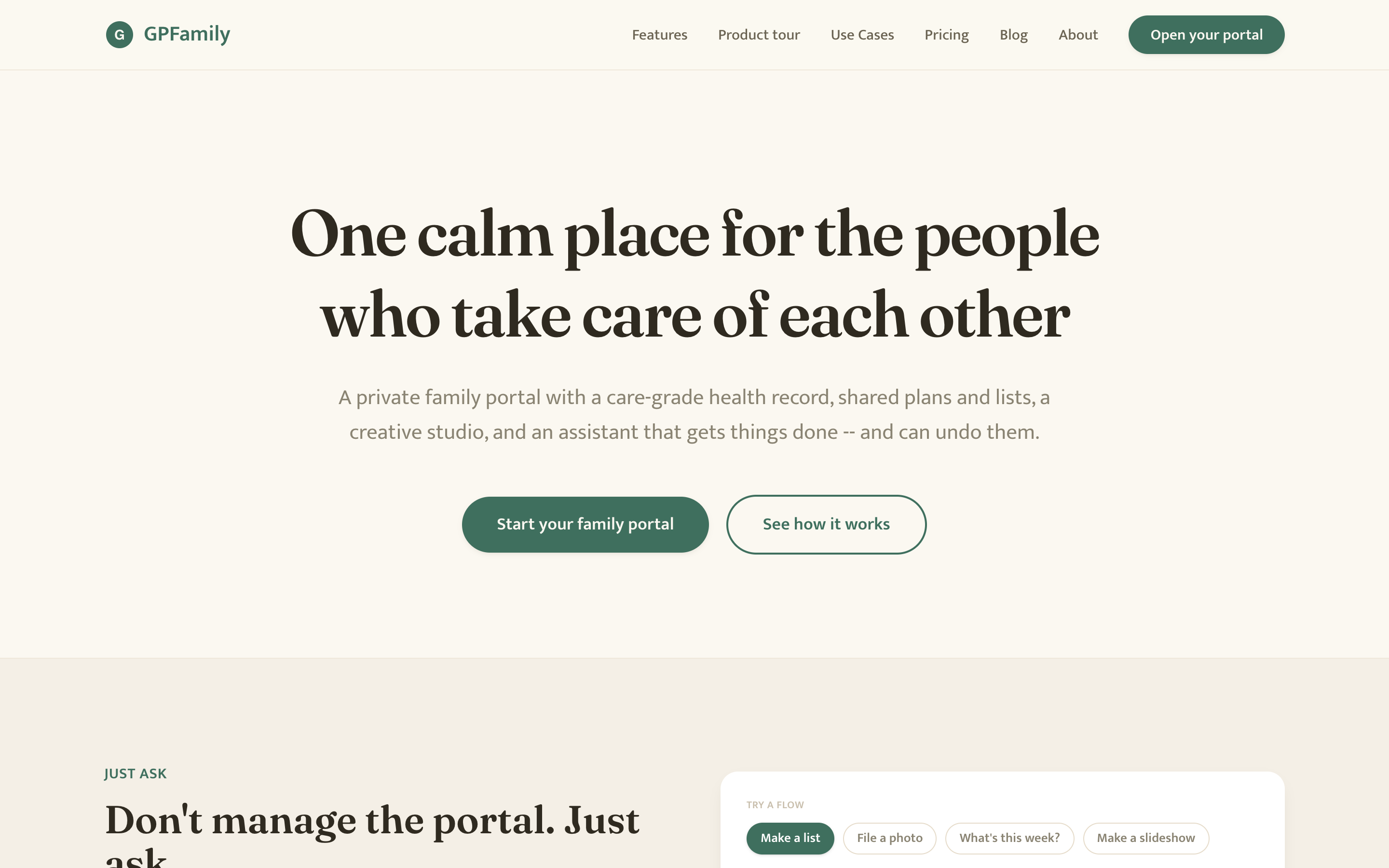
The private, shared home base for the people who take care of each other.
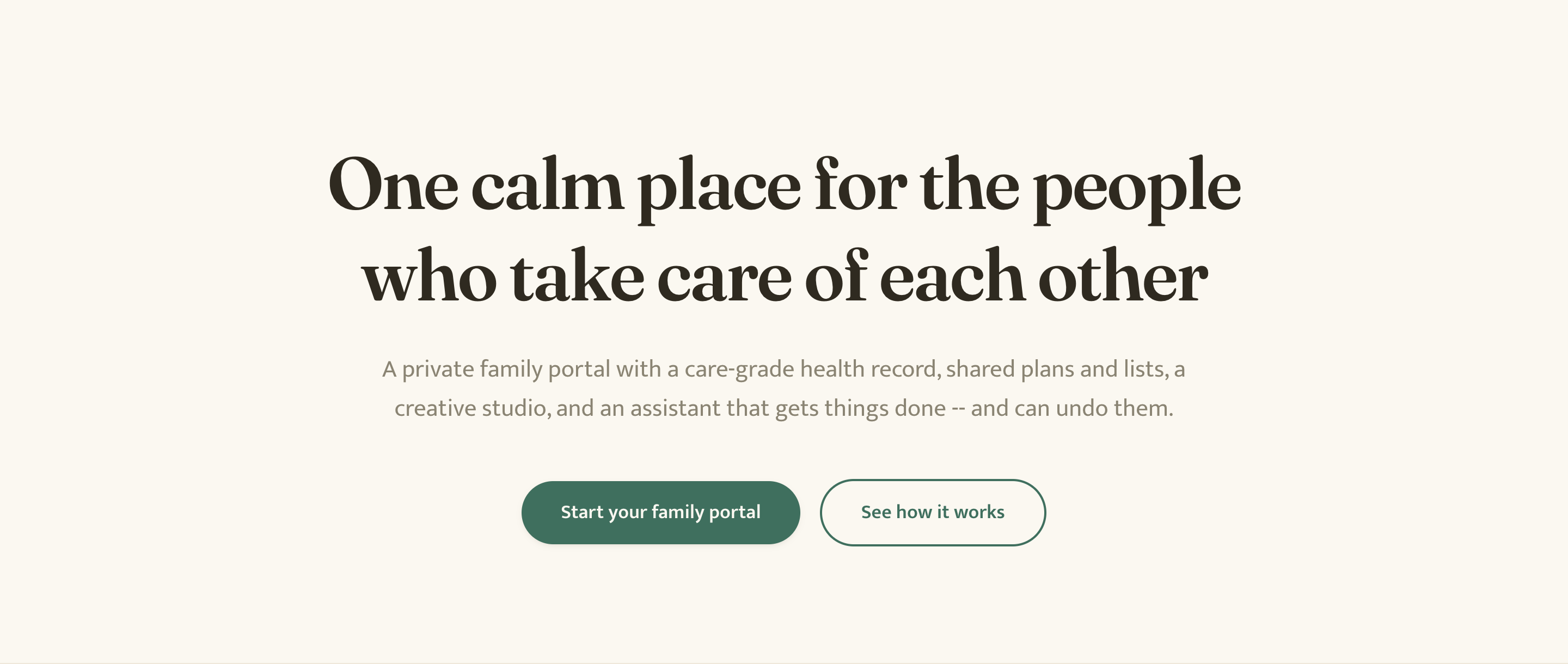
A production family-care platform: care-grade health records, shared plans and lists, a creative studio, and a portal-scoped AI assistant — private by design, live at gp.family.
Visit gp.family ↗A 17-repo platform workspace: portal shell with embeddable micro-frontend modules for events, lists, health records, and creative tools. Each module renders without iframes. Per-service D1 databases, SpiceDB authorization, and portal-scoped AI with reversible actions.
What it does
- Care-grade health tracking — vitals, symptoms, medications, patient linking
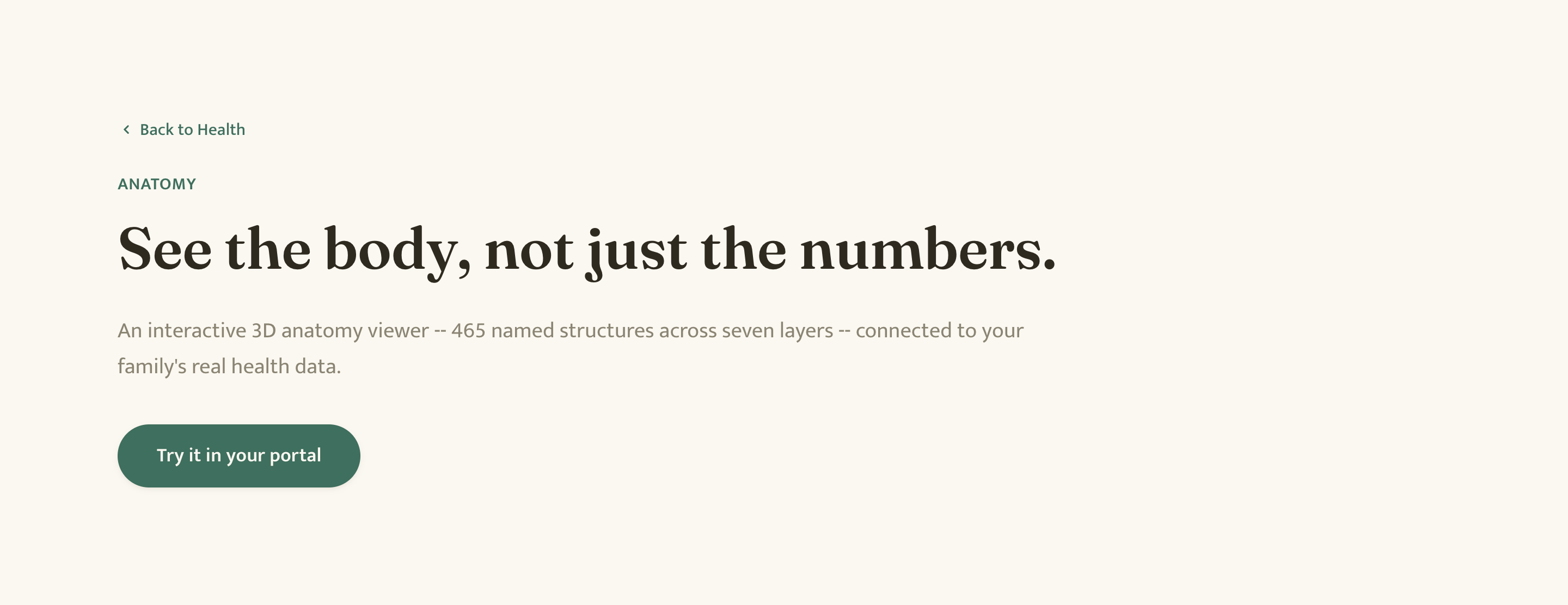
- Interactive 3D anatomy atlas (465 structures) for annotating care conversations
- Shared lists, tasks and family calendar with natural-language entry
- Full event & invitation workflows: RSVPs, guestbooks, funnel telemetry
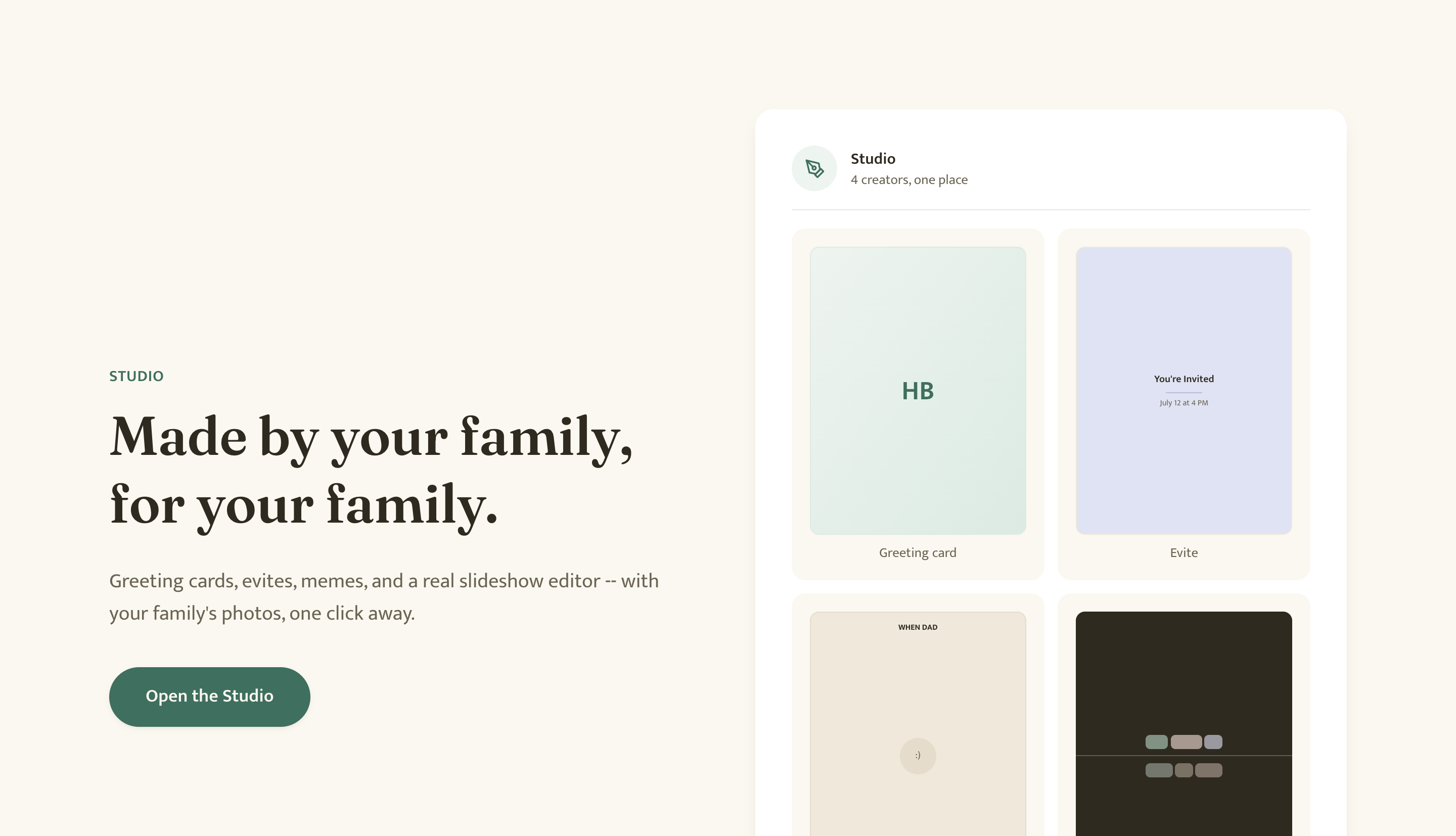
- Creative Studio: cards, evites, memes, audio slideshows
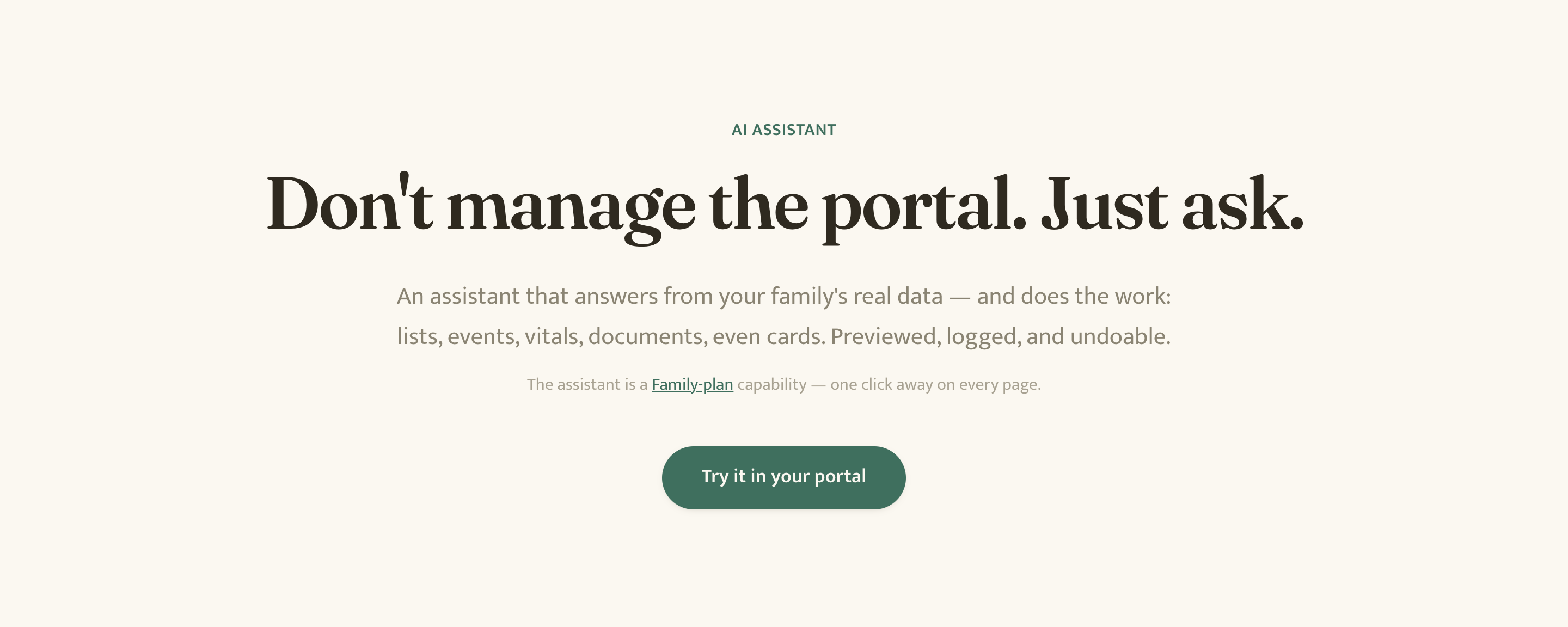
- Portal-scoped AI assistant — chat, vision, reports, reversible actions
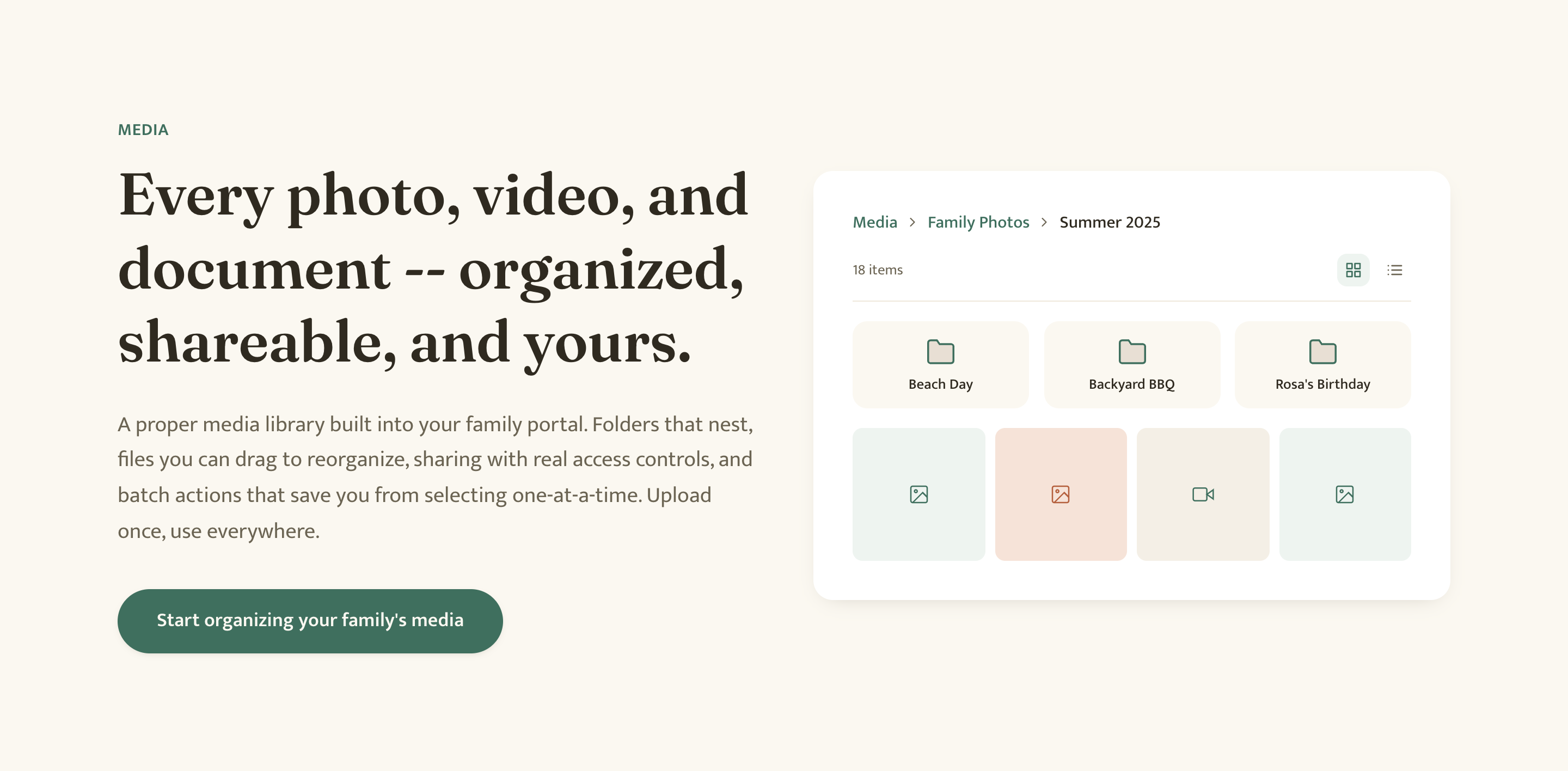
- Media library with albums, sharing links and analytics
Problem
The family-care mental load lives in scattered texts, apps, and spreadsheets. No single place holds a family's health records, shared plans, events, and creative projects together in a way that respects privacy by default.
Approach
One private portal per family. Privacy-by-design from the data model outward. Calm, care-grade UX that a grandparent can navigate and a caregiver can trust with sensitive health data.
System
A 17-repo platform workspace: a portal shell with embeddable micro-frontend modules (events, lists, health, creative studio) that render without iframes. Per-service D1 databases, SpiceDB authorization scoped to each family portal, and a portal-scoped AI assistant with reversible actions.
Craft
The design system ships as a published package (@gpfamily/brand) with Solid and React SDKs. Lighthouse CI gates enforce a minimum 0.98 performance score. A dark-mode token pipeline ensures consistent rendering across all modules.
Outcomes
A live production platform across 7 Cloudflare services, supporting care-grade health tracking with a 465-structure 3D anatomy atlas, shared lists and calendars with natural-language entry, full event and invitation workflows, a creative studio, and a portal-scoped AI assistant.
GPFamily's authorization layer is the canonical worked example for Frauthy, our auth abstraction protocol.
Design
Code
GPFamily is a 17-repository platform: a portal shell that composes independently deployed modules — embedded as micro-frontends, not iframes — each with its own service, database, and release lifecycle on Cloudflare Workers.
Portal (App)
app.gp.family ↗Family portal shell; embeds all modules, owns portals/teams/media/journal/boards
Health
Care-grade records: vitals, symptoms, medications, patient linking
Anatomy Atlas
Interactive 3D anatomy (465 structures, 5 layers) for annotating care
Events
Calendar + full invitation workflows: RSVPs, guestbooks, funnel telemetry
Lists & Tasks
Shared lists/groceries/wishlists with natural-language entry
AI Assistant
Portal-scoped chat, vision, reports; reversible action ledger; RAG
Creative Studio
Cards, evites, memes, audio slideshows
Auth
Identity + fine-grained authorization for every module
Marketing Site
gp.family ↗SEO-complete public site: features, use-cases, pricing, blog
Design System
@gpfamily/brand: tokens (4 palettes x light/dark), Solid + React SDKs
CLI (gpf)
End-user CLI client, interactive + scriptable
Plus infrastructure (Terraform/OpenTofu), a canonical spec registry, workspace tooling, cross-service acceptance testing, and shared contracts — 17 repositories in all.